INTRODUCTION: BEYOND THE HEADLINES
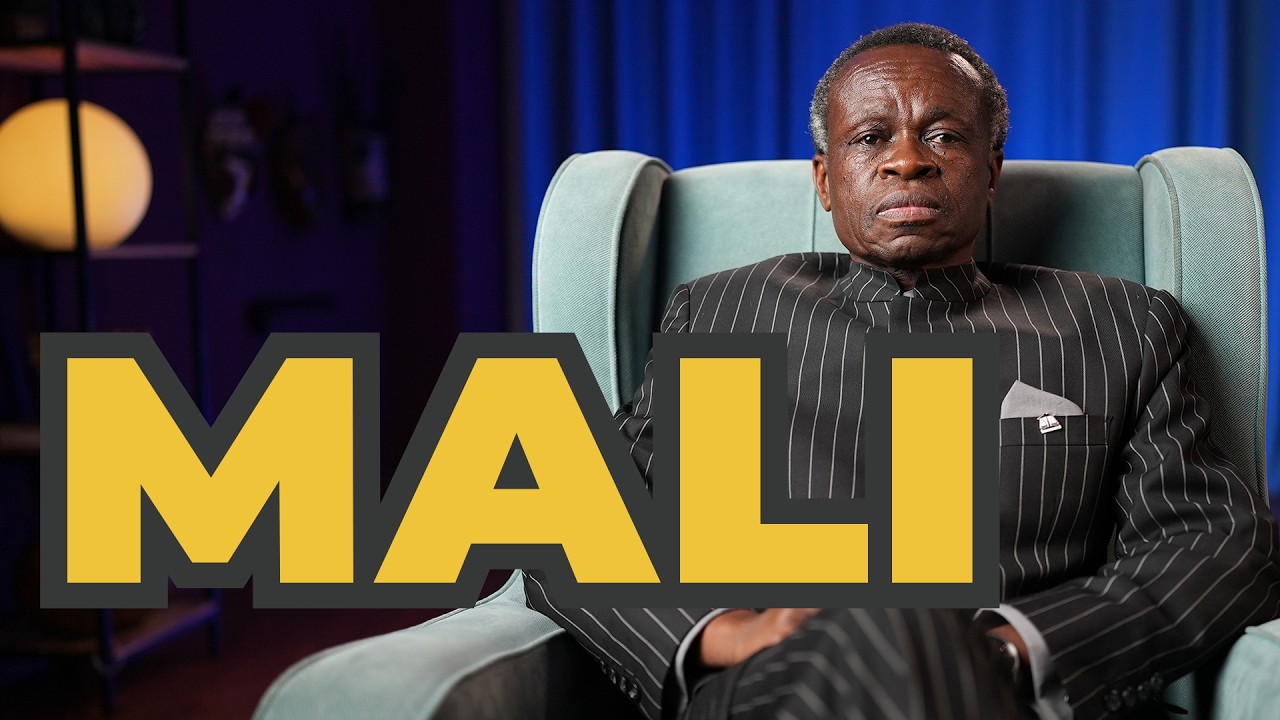
The crisis in Mali is often reduced to headlines about coups, terrorism, and ethnic conflict. But as Pan-Africanist scholar Prof. PLO Lumumba argues, this framing misses the deeper story. Mali is not merely a troubled state—it is a strategic battlefield in a global contest for resources, influence, and sovereignty
theealfahouse.com
.
As jihadist groups tighten a partial blockade around Bamako and coordinated attacks rock the country in April 2026
www.almendron.com
, understanding Mali requires examining the intersection of colonial legacies, resource wars, and great-power competition.
I. THE RESOURCE PRIZE: URANIUM, GOLD, AND GEOPOLITICAL GRAVITY
At the heart of Mali's vulnerability lies its immense natural wealth. The country holds significant deposits of uranium, gold, phosphate, and other strategic minerals critical to nuclear energy, defense industries, and modern technology
asce-uok.edu.pk
world-nuclear.org
.
For decades, these resources have attracted external powers. France, Mali's former colonial ruler, has historically viewed the Sahel as a strategic supplier of raw materials—often extracted under terms favorable to Paris
blackagendareport.com
. Lumumba notes that this economic relationship, rooted in asymmetrical power, has fueled long-term tensions within Mali
theealfahouse.com
"When one thinks about Mali, one must understand Mali in the context of resource control, not just security failures." — PLO Lumumba
www.instagram.com
II. THE COLONIAL GHOST: CFA FRANC, MILITARY PRESENCE, AND NEOCOLONIALISM
Mali gained independence from France in 1960, but many argue that decolonization remained incomplete. Lumumba identifies three enduring mechanisms of French influence:
The CFA Franc System: A monetary arrangement tying 14 African nations—including Mali's neighbors—to the French Treasury, limiting monetary sovereignty and fueling anti-French sentiment
blogs.lse.ac.uk
www.csmonitor.com
.
Military Footprint: Operation Barkhane (2014–2022) and its predecessors positioned France as the region's security guarantor, yet failed to contain jihadist expansion
www.fairplanet.org
.
Economic Leverage: French corporations maintain dominant positions in mining, infrastructure, and trade across Francophone Africa
blackagendareport.com
.
Critics label this architecture neocolonialism—a system where formal independence masks continued external control
asce-uok.edu.pk
mronline.org
. As Lumumba explains, this "invisible hand of control" never truly disappeared
theealfahouse.com
.
III. THE COUP CYCLE: ASSIMI GOÏTA AND THE REJECTION OF THE OLD ORDER
Mali has experienced multiple military takeovers since 2012, with Colonel Assimi Goïta emerging as the central figure after coups in 2020 and 2021
iorj.hse.ru
en.wikipedia.org
. These interventions were not isolated events but part of a regional pattern: Burkina Faso (2022) and Niger (2023) followed suit
warwatchlive.com
www.peoplesworld.org
The juntas share a common narrative: they present themselves as defenders of sovereignty, rejecting foreign interference and promising to restore state authority
www.postfactum.co.uk
. Their first major policy shift? Expelling French forces and terminating security agreements
www.postfactum.co.uk
.
ECOWAS and the African Union responded with sanctions and suspensions, but these measures have had limited effect on junta resolve
aa.com.tr
www.theafricareport.com
. Instead, the military governments have deepened ties with one another, forming the **Alliance of Sahel States **(AES)—a confederation explicitly framed as a Pan-African alternative to Western-dominated institutions
www.peoplesworld.org
en.wikipedia.org
.
IV. THE TUAREG QUESTION: AZAWAD, MARGINALIZATION, AND MANIPULATION
Northern Mali has been a flashpoint since independence. The Tuareg communities, historically marginalized by Bamako, launched rebellions in 1963, 1990, and most significantly in 2012, when the MNLA declared the independence of Azawad
en.wikipedia.org
en.wikipedia.org
.
While Tuareg grievances over political exclusion and resource distribution are legitimate, Lumumba cautions that these movements are often amplified or instrumentalized by external actors seeking to weaken central authority
theealfahouse.com
. The 2012 rebellion, armed with weapons looted from post-Gaddafi Libya, quickly created a power vacuum exploited by jihadist groups
en.wikipedia.org
www.geopoliticalmonitor.com
.
Today, the **Azawad Liberation Front **(FLA) represents a newer iteration of this struggle, participating in the April 2026 attacks on Bamako
www.aljazeera.com
. Understanding Azawad requires recognizing both authentic demands for self-determination and the geopolitical games played upon them.
V. THE TERRORISM TRAP: ISIS, AL-QAEDA, AND THE SECURITY CRISIS
The Sahel now accounts for over half of global terrorism-related deaths, with Mali, Burkina Faso, and Niger at the epicenter
www.facebook.com
. Two main jihadist coalitions dominate:
**JNIM **(Jama'at Nusrat al-Islam wal-Muslimin): Al-Qaeda affiliate operating across the Central Sahel.
**ISGS **(Islamic State in the Greater Sahara): ISIS branch exploiting border regions and local grievances
warwatchlive.com
humanglemedia.com
.
These groups thrive where website state presence is weak. They provide rudimentary services, impose taxation, and recruit from marginalized youth—filling governance vacuums left by distant capitals
warwatchlive.com
. The withdrawal of French and U.S. forces after 2022 accelerated this dynamic, creating security gaps that neither national armies nor new partners have fully closed
warwatchlive.com
adf-magazine.com
.
VI. THE NEW GEOPOLITICS: RUSSIA, AFRICA CORPS, AND THE WAGNER LEGACY
As Mali turned away from Paris, it turned toward Moscow. In 2021, Bamako invited the Wagner Group to assist in counterterrorism operations
www.postfactum.co.uk
. Following Wagner's formal reorganization under Russia's Ministry of Defense, its operations in Mali now fall under the Africa Corps banner
timbuktu-institute.org
acleddata.com
.
Russia's Sahel strategy rests on four pillars
timbuktu-institute.org
:
Protecting military regimes against internal and external threats
Securing access to natural resources (uranium, gold, lithium)
Expanding diplomatic influence in multilateral forums
Countering Western narratives on democracy and human rights
However, early assessments suggest the Africa Corps' "hands-off" approach has yielded mixed results, with security conditions deteriorating even as Russian presence grows
adf-magazine.com
smallwarsjournal.com
. Lumumba warns that swapping one external patron for another does not automatically advance African sovereignty
theealfahouse.com
.
VII. REGIONAL DYNAMICS: ECOWAS, ALGERIA, AND THE SEARCH FOR SOLUTIONS
The crisis has strained regional institutions:
ECOWAS has struggled to balance principle (condemning coups) with pragmatism (engaging juntas on transition timelines)
csq.fspac.ubbcluj.ro
www.theafricareport.com
.
The African Union suspended Mali but lacks enforcement capacity to shape outcomes on the ground
en.wikipedia.org
.
Algeria, historically a mediator in Sahel conflicts, faces diminished influence as AES states prioritize sovereignty over traditional diplomacy
nesa-center.org
blogs.lse.ac.uk
.
Lumumba emphasizes that sustainable solutions must be African-led: inclusive dialogue addressing marginalization, governance reforms that deliver services, and regional cooperation that respects sovereignty while coordinating security
theealfahouse.com
.
VIII. PAN-AFRICANISM REIMAGINED: THE ALLIANCE OF SAHEL STATES
The **Alliance of Sahel States **(AES)—uniting Mali, Burkina Faso, and Niger—represents the most ambitious attempt to forge a post-colonial security architecture
www.peoplesworld.org
en.wikipedia.org
. Key features:
A 5,000-strong joint military force to combat jihadist expansion
www.facebook.com
Commitment to mutual defense and intelligence-sharing
Rejection of foreign military bases and conditional aid
Advocacy for reform of the CFA franc and greater economic integration
Supporters hail the AES as a breakthrough for Pan-Africanism; critics worry it may entrench military rule and isolate the region from development partners
www.peoplesworld.org
www.aljazeera.com
. Lumumba urges caution: sovereignty requires not just the absence of foreign troops, but the presence of accountable, inclusive governance
theealfahouse.com
.
CONCLUSION: SOVEREIGNTY, STABILITY, AND THE PATH FORWARD
Mali's crisis is a microcosm of Africa's broader struggle: how to achieve genuine sovereignty in a world of competing powers, extractive economies, and transnational threats.
PLO Lumumba's analysis offers three guiding principles for Thee Alfa House readers:
Follow the resources: Instability often intensifies when control over uranium, gold, or strategic minerals is contested. Ask: Who benefits?
theealfahouse.com
Question the narratives: Both Western and Eastern powers frame interventions as "stability missions." Scrutinize whose interests these narratives serve.
Center African agency: Lasting solutions require inclusive politics, regional cooperation, and economic models that serve African people—not external shareholders.
As the Sahel stands at a crossroads in 2026, the choices made in Bamako, Ouagadougou, and Niamey will resonate far beyond West Africa. The question is not whether external powers will engage—but whether African states can engage them on their own terms.
"Africa must take responsibility for its own stability. Not through isolation, but through unity, wisdom, and unwavering commitment to the dignity of its people." — PLO Lumumba